The Leclerc Leprohon Collection was created in 2018 in memory of two Quebec painters, Gisèle Leclerc (1931-2013) and Robert Leprohon (1926-2018), who marked a unique era in the cultural and artistic development of Quebec, the post-war 1950s.
In Quebec City, the École des Beaux-Arts has been training the next generation of artists since 1922. I 1952, the young Gisèle Leclerc received her father’s permission to study at the École des Beaux-Arts. In addition to the legacy of a European tradition, professors deeply representative of authentic Quebec and Canadian Culture, such as Jean-Paul Lemieux and Jean Dallaire, would profoundly influence Gisèle Leclerc and an entire generation. These years would also mark the beginning of lifelong friendships with artists such as Edmund Alleyn, Thérèse Brassard and Guy Paradis.
While the Quebec School remained committed to figurative painting, in Montreal the Refus Global movement offered a complete break from classical models. Robert Leprohon came from a Montreal background that did not predispose him to artistic training, but along with the discovery of the old Masters in 1944 he became fascinated by the new vision of painting pursued by Paul Émile Borduas and a group of young artists gathering around him. From his early twenties, he frequented these avant-garde circles and formed close friendships, particularly with Marcel Barbeau and Pierre Gauvreau.
In this context of artistic ferment, the small village of Port-au-Persil, in the Charlevoix region, became a favored meeting place for numerous Quebec and Canadian artists. The small inn in Port-au-Persil became a place of work, inspiration, and exchange for all these artistic movements.
It was there in 1953 that Gisèle and Robert first met. Coming from two different cultural and artistic backgrounds, one in Quebec City and the other in Montreal, they married in Quebec City in 1955. Robert chose Quebec City as his home, where he would start a family and, if life allowed it, paint. He remained there until his death in 2018.
In those years of societal transformation, when the Refus Global manifesto advocated for the complete and personal liberation of the artist, their lives were marked by numerous challenges and heartbreaks, but also by the deep friendship that bound them until their final days.
From 1944 to 2018, their works bear witness to the integrity of their search and the evolution of an era.Gisèle Leclerc remains a major figure in Quebec Expressionism, and Robert Leprohon, an eminent painter of form and light.
The Leclerc Leprohon Collection was founded by the Estate of Robert Leprohon and Gisèle Leclerc to preserve and promote the legacy of this important cultural and artistic heritage.
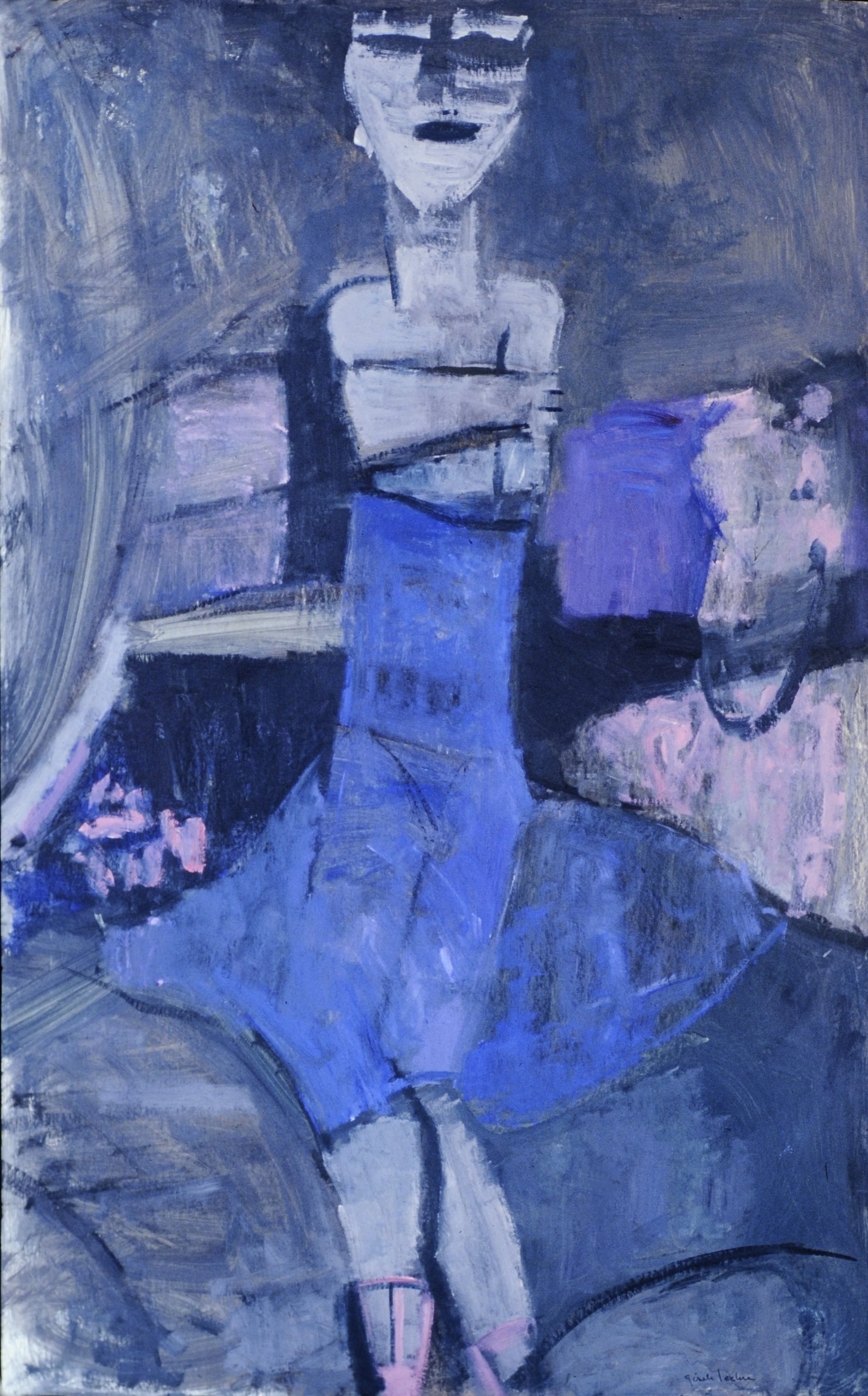
Gisèle Leclerc, Jeune fille dans sa loge, Oil on Canvas, 1977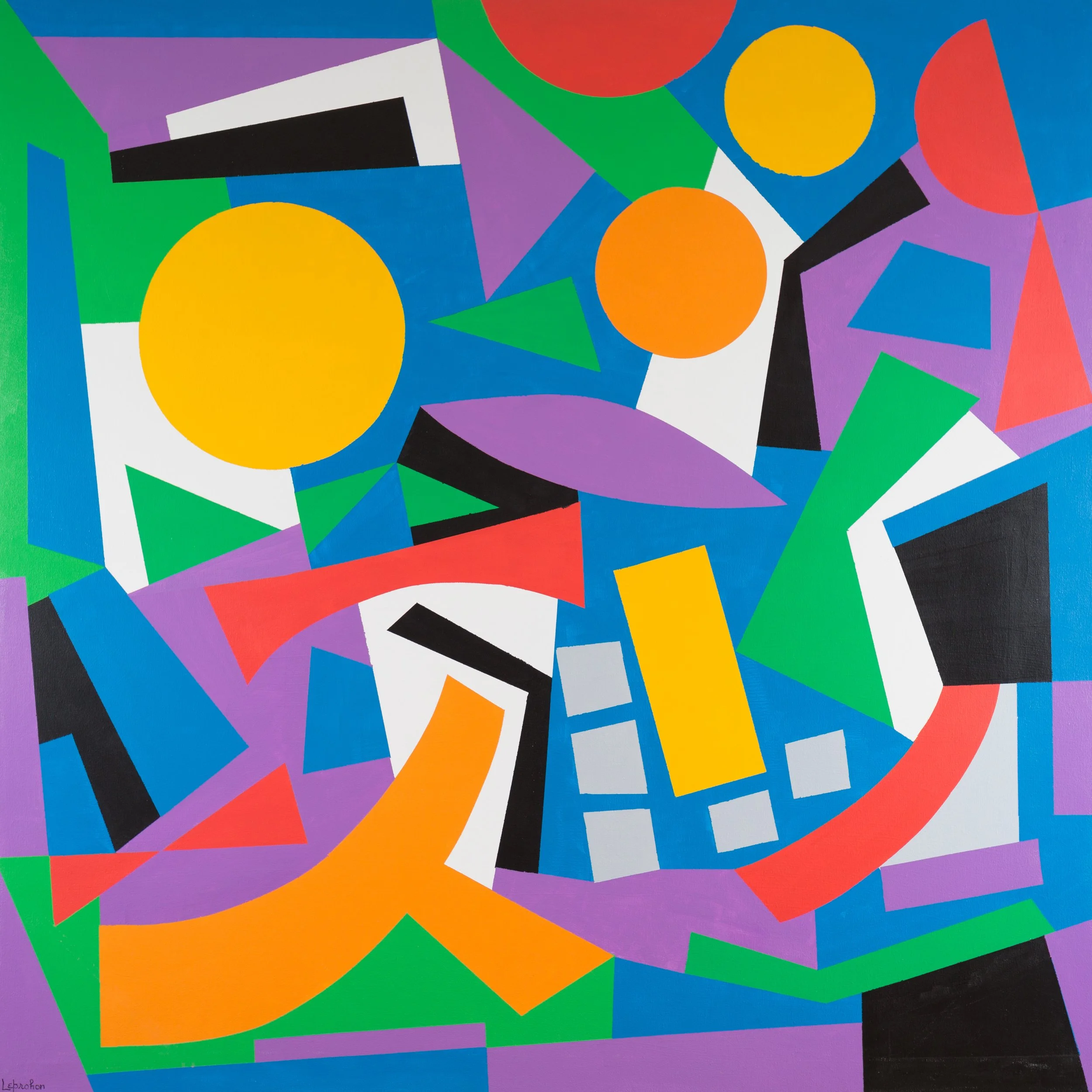
Robert Leprohon, Évasion Consciencieuse, Acrylic on Canvas, 2013